

The hills around Chatsworth have a familiar shape even for people visiting for the first time. Sandstone outcrops, open slopes and oak groves gave filmmakers settings that could become many different places on screen. A film-history outing here can be a walk through that landscape, with a few photographs or production stories giving the rocks and paths a second layer of meaning.
From a stay at Blue Cottage, choose one former movie-ranch site as the main outing. Garden of the Gods in Chatsworth and Corriganville in eastern Simi Valley are both public places with documented film connections. They offer different experiences, so give each its own time rather than rushing to collect both names in a single morning.
Look for the frame at Garden of the Gods
Garden of the Gods occupies part of the former Iverson Movie Ranch in northwestern Chatsworth. The Mountains Recreation and Conservation Authority describes the 23-acre park’s sandstone formations and film history, including productions such as The Lone Ranger and Tarzan the Ape Man. Its public approach is from Redmesa Drive. Official park information gives the location and visitor details.
On the path, stop where a single outcrop has a clear silhouette. Look at it from one direction, then take a few steps and look again. A small change of angle can make the rock fill the picture or reveal the wider neighborhood beyond it. That is a simple way to appreciate what a location gives a camera: shape, scale and the freedom to choose what enters the scene.
Our Garden of the Gods guide links the public trail approach and a Los Angeles Public Library photograph record. Save a documented historic image before you leave and compare the shape in that photograph with what you see from the public path.
Read the traces at Corriganville
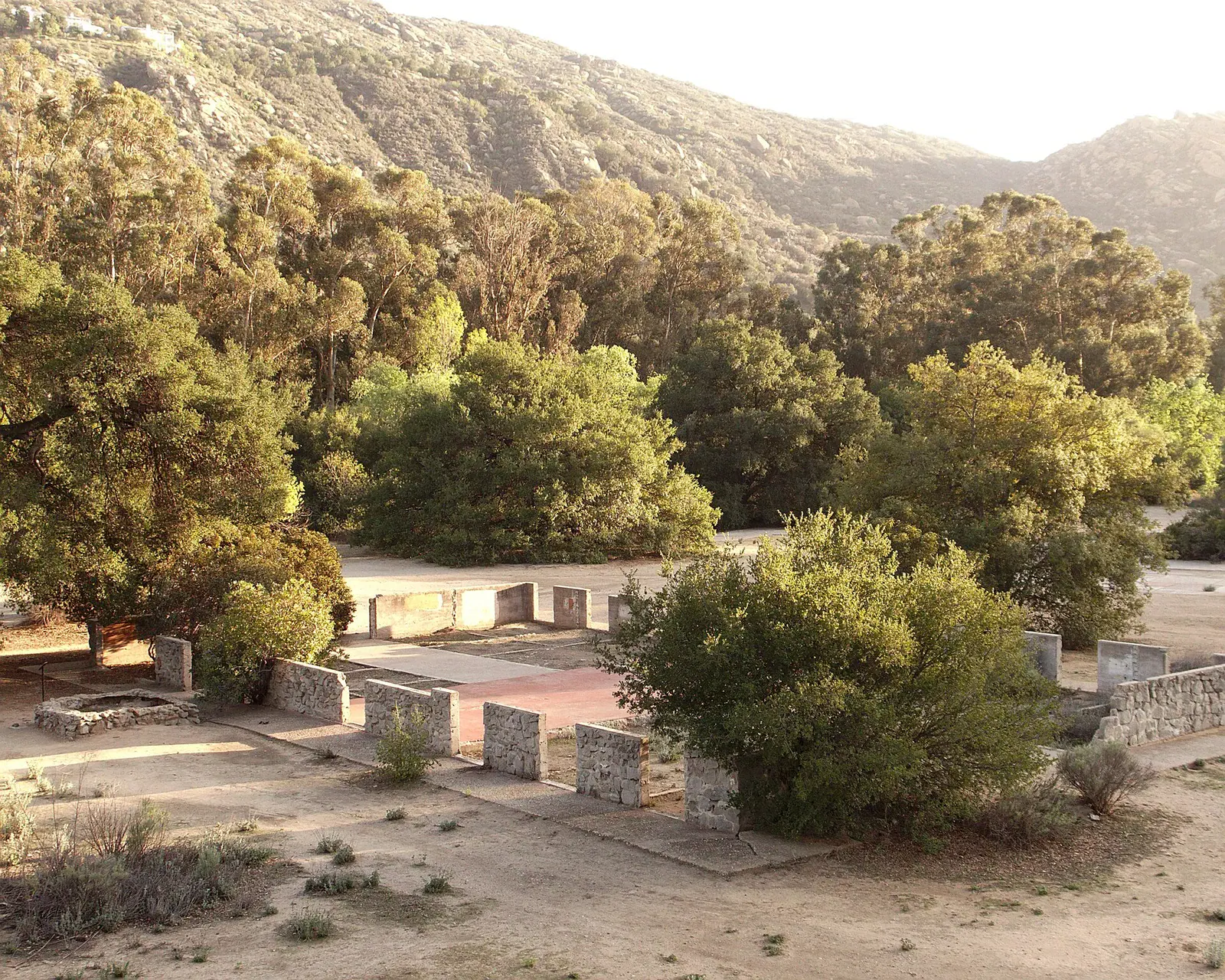
At Corriganville Park, the film story is also in traces of former sets. The park district lists hiking paths, picnic tables and remnants of the historic movie-ranch structures, some accompanied by signs. Its documented screen credits include Fort Apache and The Adventures of Rin Tin Tin. The public car park is reached from the end of Smith Road in Simi Valley. The park district’s Corriganville page brings the history and current visitor information together.
Give the interpretive signs enough time. A foundation or a patch of ground makes more sense when you understand the structure that stood there. Look from the remains toward the nearby rocks and trees, and imagine how the built scenery and the natural setting worked together. A pause at a picnic table lets the group compare the details that each person noticed.
The Corriganville and Santa Susana Depot guide is useful if your group would enjoy extending the outing into railway history. Check the depot’s current visitor arrangements before building the day around that second stop.
Make a small location notebook
Choose one film or television connection to follow rather than trying to identify every rock. Bring a saved archive photograph, note its title and date, and add your own picture taken from a stable place on the public trail. Keep the original archive information with the comparison so you can find it again later.
Children can join in by choosing a scene they would place in the landscape and explaining their choice. A narrow passage might suggest an arrival; an open view might suit an ending. The exercise makes the outing about looking closely, and it gives everyone something to contribute even when their favorite films come from different decades.
Let the evening finish the story
Back at the cottage, put the photographs together over dinner or choose a film whose locations you have been reading about. The shared living room offers an easy place to gather after the outdoor part of the day. You can compare the way the landscape appears on screen with the quieter experience of walking through it.
For a longer visit, pair the film outing with a different kind of local morning, such as the gardens at Orcutt Ranch or a museum open house. Check the cottage’s availability options and make room for both the places you want to see and an evening spent enjoying them together afterward.
Frequently asked questions
Where can we find historic location photographs?
The Los Angeles Public Library’s TESSA collections include photographs of Chatsworth and its film landscapes. Search by the place name or Iverson Movie Ranch, then keep the record details with any image you save.
Which Garden of the Gods should we put into our map?
Use Garden of the Gods, Chatsworth, California, with the public approach from Redmesa Drive. Including the city and state keeps the local film landscape distinct from similarly named parks elsewhere.
What is a good companion visit for someone interested in the wider history?
Homestead Acre and the Chatsworth Museum add a community-history perspective. Plan around the Historical Society’s current open-house calendar so the museum can be a proper part of the day.